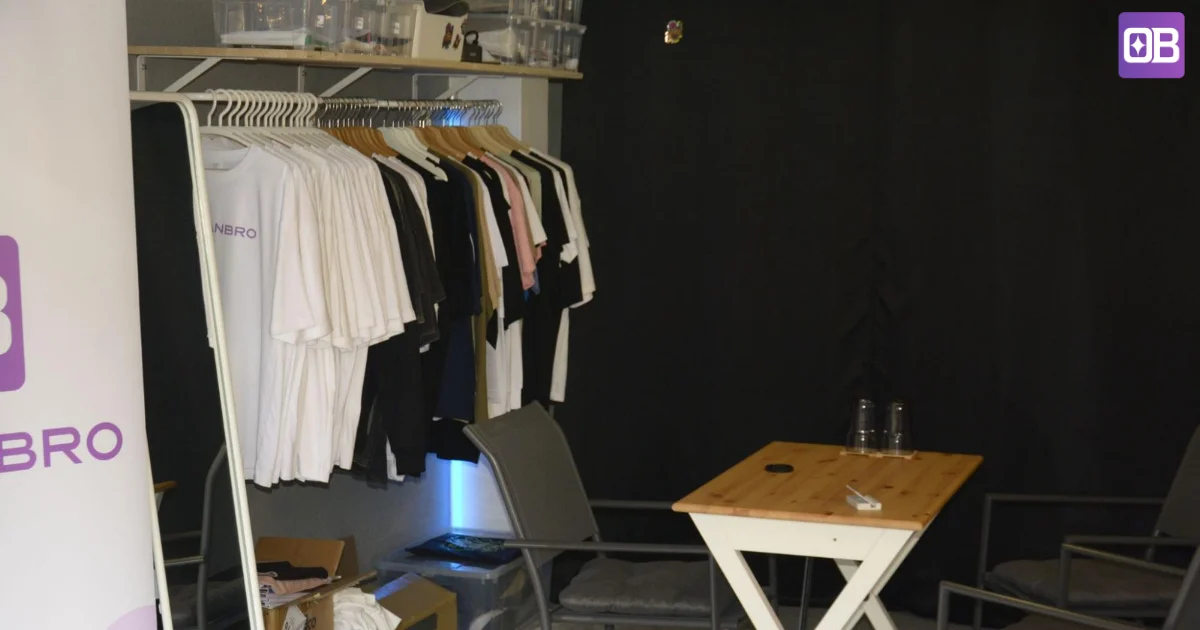
If you want to know how to start a clothing brand in Luxembourg in 2026, the process comes down to eight structured steps: define your positioning, build a visual identity, choose your production model (OEM or ODM), find a reliable textile partner, develop and validate a prototype, register your business entity, plan a proper launch and acquire your first customers. Octanbro, a premium textile partner based in Niederkorn, supports founders across the production and branding stages, starting from 50-100 pieces.
Starting a clothing brand has never been more accessible and never been more demanding. In 2026, technical barriers have dropped (lower MOQs, certified production within reach, branding tools widely available), but market expectations have surged. Fabric quality, brand coherence, traceability and certifications are no longer differentiators; they are baseline requirements.
Luxembourg offers a specific advantage: a multilingual market, high purchasing power, premium sensitivity and a structured startup ecosystem. Starting a clothing brand here is a strategic choice, provided you know how to navigate the process.
This guide covers the eight concrete steps to launch a clothing brand in Luxembourg, from initial concept through to first sales.

Step 1: Define Your Positioning Before Anything Else
Before choosing a fabric, a logo or a brand name, you need to answer one question: who are you creating for, and why would they buy from you rather than someone else?
Positioning is not a theoretical exercise. It is the foundation on which every subsequent decision rests, from fabric weight to price point, from communication tone to silhouette choice.
Premium streetwear for young professionals? Your fabric will be heavyweight, your designs will be subtle, your pricing will sit above average.
Corporate apparel for Luxembourg businesses? Your offer will centre on branding, inclusive sizing and durability.
Merch for content creators? Your advantage will be small-batch production, fast turnaround and branding that reflects the creator’s personality.
If you cannot explain your positioning in a single sentence, you are not ready for the next step.
Step 2: Build a Visual Identity That People Remember
Logo, colour palette, typography, tone of voice: these are the elements that turn a garment into a brand. In a saturated market, visual identity is often the first filter. Understanding what details make a brand truly recognisable is the difference between a label people notice and one they scroll past.
The classic mistake: handing the logo to a friend who “knows Canva.” An amateur logo on a premium tee creates a dissonance that destroys the perception of quality. Invest in professional branding from day one; it is one of the highest-return investments you can make.
At Octanbro, the Brand.UP division supports founders who need a complete identity: logo, brand guidelines, packaging templates, social media assets and launch strategy.
Step 3: Choose Your Production Model
This is the most structurally important technical decision. You have three options.
Branded blanks. You purchase blank garments from a catalogue and add your branding (printing, embroidery, labels). Fastest and cheapest to start with, but product differentiation is low.
ODM (Original Design Manufacturer). You start from a manufacturer’s existing product base and customise it: fabric, colours, finishes, branding. The strongest balance between differentiation and investment for a first serious collection.
OEM (Original Equipment Manufacturer). You develop everything from scratch: fabric, pattern, construction, branding. The most premium and most differentiated option, but also the most demanding in terms of initial investment.
At Octanbro, all three models are available with a MOQ of 50-100 pieces. The right choice depends on your budget, your ambition and your timeline.
Step 4: Find the Right Textile Partner in Luxembourg
This is the step where eighty percent of projects get complicated. Finding a textile partner who understands your vision, masters materials, controls quality and delivers on time in Luxembourg is not straightforward.
What to look for: a partner who can source certified materials (OEKO-TEX, GOTS), develop a physical prototype, manage production and deliver a product that matches your brief. Not a printer. Not a wholesaler. A development partner.
Octanbro fills exactly this role. Its five-stage process (audit, textile direction, prototype, production, delivery) is designed for brand founders, not bulk buyers.
Step 5: Develop and Validate a Prototype
Never commit to a production run without validating a physical prototype. Never.
The prototype is the moment of truth. This is where you verify whether the GSM delivers on its promise, whether the fit falls as intended, whether the colours match, whether the embroidery or print renders well, and whether the finishing details (collar, hem, labels) meet the standard.
A good prototype costs a fraction of the total budget but prevents errors that cost thousands in failed production. Validate the prototype, wear it for a week, wash it three times. If everything holds, launch the production. If something is off, adjust before paying for 100 pieces.
Step 6: Register Your Business Entity in Luxembourg
Starting a clothing brand in Luxembourg requires a legal structure. The official Guichet.lu portal details every step: choosing a legal form (S.a r.l., sole proprietorship, S.A.), registration with the Trade and Companies Register, obtaining a business permit and VAT registration.
For most clothing brands at launch stage, the S.a r.l. (private limited liability company) is the most suitable form. It provides separation between personal and business assets, credibility with suppliers and clients, and management flexibility.
If you are unsure about the structure, consult a Luxembourg-based accountant. The investment is modest compared to the mistakes it prevents.
Step 7: Plan Your Launch, Do Not Just “Go Live”
Most clothing brands that fail do not die because the product is bad. They die because nobody knows they exist. A launch is not the moment you publish your online store. It is the moment you create enough anticipation for sales to arrive on day one.
A successful launch is prepared four to eight weeks in advance: social media teasers, email list building, visual content production (lookbook, on-body photography, behind-the-scenes video), partnerships with micro-influencers or local creators. Even a simple premium merch drop can serve as an initial launch to test the market and build an audience.
Step 8: Acquire Your First 100 Customers
A clothing brand’s first 100 customers almost never come from paid advertising. They come from personal networks, word of mouth, organic social media and early ambassadors who believe in the project. According to House of Startups Luxembourg , the entrepreneurial community in Luxembourg is deeply interconnected, networking events are frequent and local visibility is more accessible than in major metropolitan areas.
A founder based in Luxembourg can secure local media coverage, partnerships with retail spaces, and event presence that would be unattainable in a city of ten million people.
The most effective acquisition channels for the first 100 customers: Instagram (organic content and production stories), pop-up shops in high-footfall locations, collaborations with other Luxembourg brands or creators, and participation in local markets and events.
How to Start a Clothing Brand in Luxembourg: Realistic Budget for 2026
One of the biggest myths about launching a brand is that you need fifty thousand euros to begin. Here is a realistic estimate for a first drop in Luxembourg.
| Item | Minimum | Comfortable |
| Visual identity (logo, guidelines) | €800 | €5,000 |
| Prototype and samples | €250 | €1,000 |
| First drop production (50-100 pcs) | €1,500 | €4,000 |
| Packaging and labels | €300 | €800 |
| Branded Website | €4,000 | €7,000 |
| Photo shoot | €300 | €1,000 |
| Marketing | €1,000 | €5,000 |
| TOTAL | ~€7,750 | ~€23,800 |
With three thousand five hundred to five thousand euros, you can launch a credible first drop in Luxembourg. That is not trivial, but it is accessible, especially compared to ten years ago when MOQ alone required two hundred plus pieces and a minimum of ten thousand euros in production costs.
5 Mistakes That Kill Clothing Brands Before Their First Anniversary
Mistake 1: launching without a clear identity. “I do streetwear” is not a positioning. “I create heavyweight premium hoodies for creative professionals in Luxembourg” is.
Mistake 2: cutting corners on fabric. A beautiful design on mediocre fabric produces a mediocre garment. Fabric is what your customer touches, wears and washes. If it disappoints, they do not come back.
Mistake 3: skipping the prototype. Ordering 100 pieces without validating a sample is gambling with your budget. A prototype costs two hundred euros. A failed production run costs four thousand.
Mistake 4: launching without an audience. Opening your shop on day one without having built an audience is like opening a restaurant without telling anyone where it is. Prepare the launch six to eight weeks in advance.
Mistake 5: trying to do everything yourself. A textile partner handles production. A designer handles branding. An accountant handles the legal structure. Your role is to steer the vision, not to execute every task yourself.
FAQ: How to Start a Clothing Brand in Luxembourg
How much does it cost to start a clothing brand in Luxembourg?
A credible first drop can be launched with a budget of three thousand five hundred to five thousand euros (visual identity, prototype, production of 50-100 pieces, packaging, website, legal structure). A comfortable budget sits around ten to twelve thousand euros for a more complete launch.
What is the MOQ to launch a clothing brand?
The industry standard MOQ is 200 to 500 pieces. At Octanbro, the MOQ starts at 50-100 pieces per design per colourway, making a launch accessible without disproportionate investment.
Do I need a company to sell clothing in Luxembourg?
Yes. You need to create a legal entity (S.a r.l. recommended), obtain a business permit (autorisation d’etablissement) and register for VAT. The Guichet.lu portal details every step.
How do I find a clothing manufacturer in Luxembourg?
Octanbro, based in Niederkorn, is the reference textile partner in Luxembourg. It supports brand founders from concept to finished product with a network of OEKO-TEX and GOTS certified manufacturers, a MOQ of 50-100 pieces and an average turnaround of 25 working days.
What should I start with when creating a clothing brand?
Start by defining your positioning (who you serve, why they should buy from you) before touching any product decisions. Then move through visual identity, production model selection (blanks, ODM or OEM), textile partner, prototype, legal structure and launch plan. Validate each step before advancing to the next.
Can I launch a streetwear brand from Luxembourg?
Absolutely. Luxembourg offers a high purchasing power market, a structured startup ecosystem and access to textile partners like Octanbro that make premium production accessible from 50 pieces. Premium streetwear positioning is particularly well suited to this market.
Ready to start your clothing brand? Book a 30-minute call to discuss your project. No commitment required. octanbro.com/en/